
There's a specific kind of quiet you notice the moment you land in Paro. It isn't the absence of noise exactly — there are still cars, still market stalls, still monks chatting on their way to prayer. It's the absence of hurry. Nobody is rushing you through Bhutan, and that alone makes it feel different from almost anywhere else in Asia.
While most of the travel world spends 2026 chasing footfall numbers and building bigger airports, Bhutan is still doing the opposite. It measures its own progress in Gross National Happiness, not GDP. For travelers who are tired of overcrowded hill stations, viewpoints clogged with tripods, and destinations that feel like they've been flattened by their own popularity, that makes Bhutan one of the most rewarding trips you can plan this year.
Why Bhutan, Why Now
Bhutan runs on what it calls a "High Value, Low Volume" tourism model. In plain terms: visitor numbers are intentionally kept low, so you're not jostling for space at a monastery entrance or sitting in traffic on a mountain road behind six other tour buses. It's a country that has chosen to stay small on purpose.
2026 brings a few real changes worth knowing about before you book. A new 5% Goods and Services Tax now applies on tourism services, on top of the existing Sustainable Development Fee (SDF) that funds the country's free healthcare and education systems. Meanwhile, the ambitious Gelephu Mindfulness City project is opening up southern Bhutan in ways that weren't possible a few years ago. None of this makes Bhutan a budget destination — it never has been — but it does make the intent clear. This is a country that wants quality visitors, not crowds, and it has built its entire tourism economy around that idea.
Top Experiences You Shouldn't Skip
Tiger's Nest Monastery (Paro Taktsang)
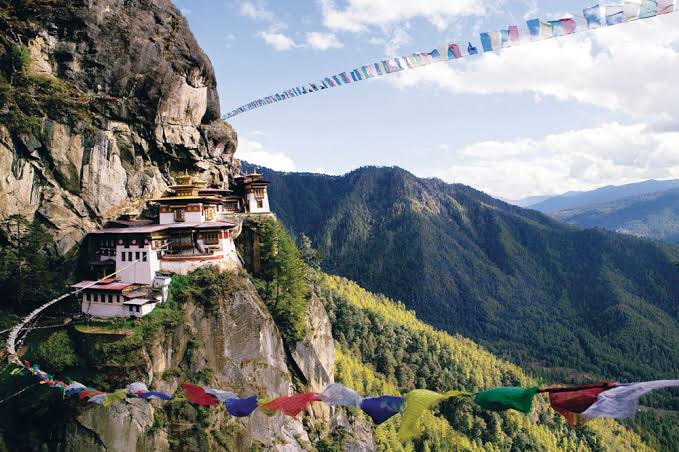
This is the hike everyone talks about, and it earns the hype. Paro Taktsang clings to a cliffside nearly 900 metres above the Paro Valley floor, and the climb up is moderately strenuous — figure 3 to 5 hours round trip depending on your pace and how many tea-house breaks you take. There's a rhythm to it: forested switchbacks, a sudden viewpoint where the monastery first comes into full view, then a final descent-and-climb across a small gorge before you reach the entrance. Non-negotiable for a first visit.
Punakha Dzong
Often called the most beautiful fortress in Bhutan, and it's hard to argue once you've seen it. Punakha Dzong sits at the confluence of two rivers — the Pho Chhu (father river) and Mo Chhu (mother river) — connected to the mainland by a traditional wooden cantilever bridge. In spring, the jacaranda trees around it bloom purple against the whitewashed walls, which is the postcard shot everyone's chasing but rarely captures right.
Phobjikha Valley
A wide, glacial valley in central Bhutan, best known for the black-necked cranes that migrate here from the Tibetan plateau in late autumn. It's quieter and slower than Paro or Thimphu, without a single traffic light or major commercial strip — just farmhouses, grazing yaks, and a monastery on the hillside. If Paro is Bhutan's highlight reel, Phobjikha is its unhurried afternoon.
Thimphu
Bhutan's capital is small by any global standard, but it's the best place to see modern Bhutanese life sitting comfortably alongside centuries-old dzongs and monasteries. Walk through the weekend market, visit the giant Buddha Dordenma statue overlooking the valley, and don't be surprised if you see archery — Bhutan's national sport — being played in a field on a random weekday afternoon.
Chele La Pass
At just over 3,900 metres, this is one of the highest motorable passes in Bhutan, strung with prayer flags that snap in the wind. On a clear day, you can see both the Paro and Haa valleys from here, with the higher Himalayan peaks visible in the distance.
Also worth tracking: the Trans Bhutan Trail, a historic 400-plus kilometre walking route that has been revived and reopened in sections after decades of disuse. For travelers who want a multi-day trekking experience beyond the standard Paro-Thimphu-Punakha circuit, this is where Bhutan is quietly getting more interesting.
Best Time to Visit
Spring (March to May) is peak season for good reason — mild weather, valleys bursting into bloom, and the Paro Tshechu festival drawing crowds of locals in full traditional dress.
Autumn (September to November) brings the clearest Himalayan views of the year and ideal conditions for high-altitude treks like Jomolhari, alongside the Thimphu Tshechu. Many seasoned Bhutan travelers consider this the better of the two peak windows.
Winter is cold but sunny, with dramatically fewer crowds and better hotel rates. Thimphu and Paro occasionally see snowfall, which turns the whole valley into something out of a postcard.
Monsoon (June to August) is the quietest season of all — good for wellness-focused trips, hot stone baths, and easier permit approvals, though you should expect regular afternoon showers.
Entry, Visas, and Permits
Most international travelers need to arrange their visa in advance, along with paying the Sustainable Development Fee that directly funds Bhutan's conservation programs, free healthcare, and free education. Indian, Bangladeshi, and Maldivian nationals do not require a visa, though an entry permit is still mandatory for everyone.
As of 2025, travelers are no longer required to book exclusively through a licensed tour operator, which has genuinely opened things up for independent trip planning. That said, a basic entry permit typically only covers Thimphu and Paro — if your itinerary includes Punakha, Bumthang, Haa Valley, or anywhere further afield, you'll need a Restricted Area Permit as well, arranged through the Department of Immigration.
Only two airlines currently fly into Paro International Airport, and the approach itself is famous among pilots and passengers alike as one of the most scenic — and technically demanding — landings in the world, threading between mountain ridges before touching down in the valley. Seats sell out early, especially around the spring and autumn festival seasons, so book well ahead.
A Few Honest Travel Tips
Learn a handful of basic Dzongkha phrases before you go — even a clumsy "kuzuzangpo" (hello) tends to get a warm response. Bhutan takes its eco-conscious reputation seriously, so travel light on single-use plastic and be mindful of your footprint in general. Layer your clothing regardless of the season, since temperatures shift fast with altitude, sometimes within the same afternoon. And carry proper travel insurance — medical evacuation from a remote valley is not something you want to be paying for out of pocket.
Final Thought
Bhutan isn't a destination you rush. It rewards the traveler who's willing to sit through a full butter tea ceremony without checking their phone, who lets a five-day itinerary feel unhurried instead of packed to the minute. For a first trip into the Himalayan kingdoms, it's genuinely hard to beat.