
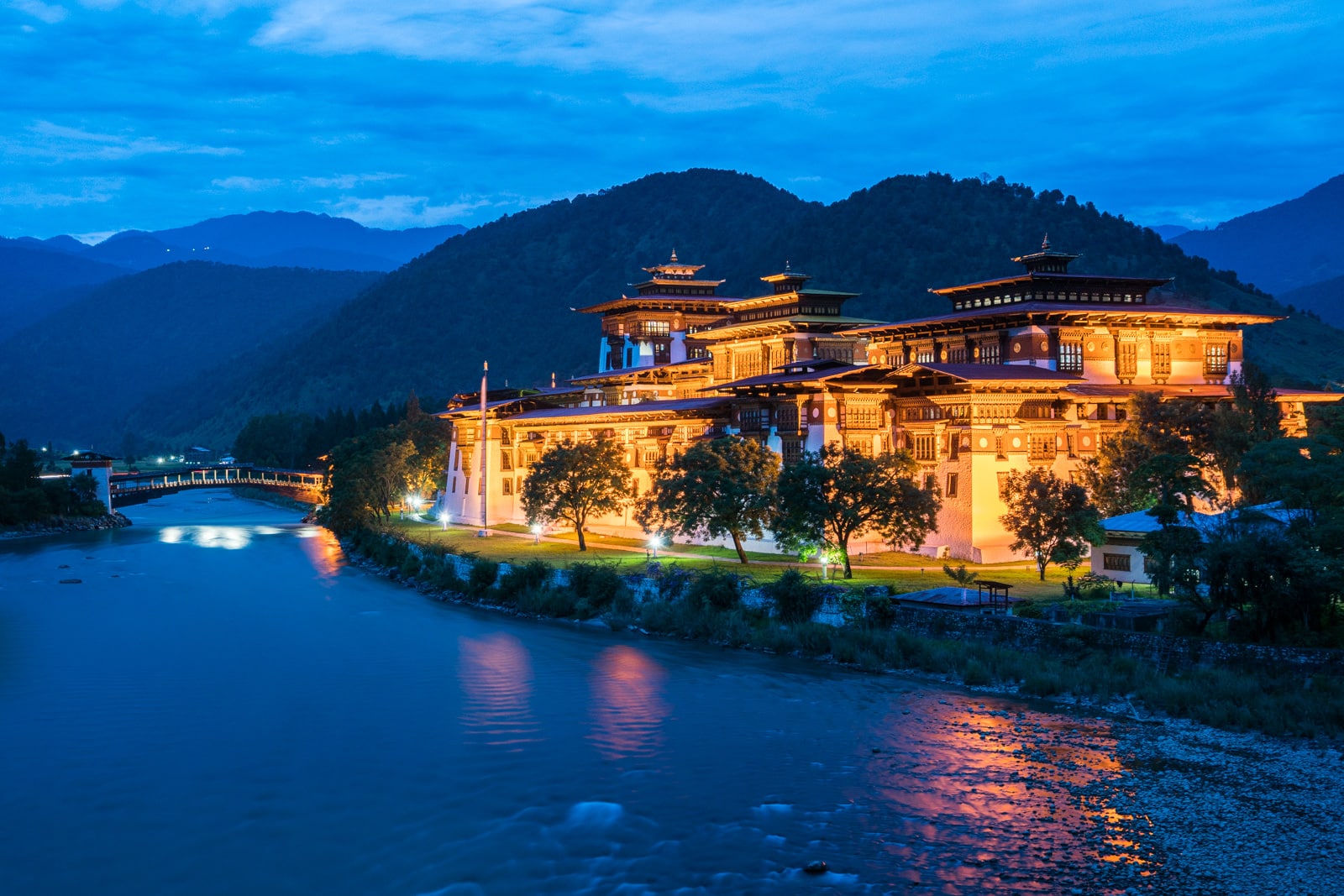
Of all the international trips an Indian traveler can take without a visa, Bhutan is easily the most dramatic. One moment you're standing in the noisy, crowded border town of Jaigaon in West Bengal — auto horns, roadside stalls, the usual chaos of a small Indian town. A few hundred metres later, across a single gate, you're in Phuentsholing, and the streets are suddenly immaculate, quiet, and unmistakably Bhutanese. Few land borders anywhere in the world offer that kind of contrast in under a minute of walking.
If you've been putting off Bhutan because it sounds like "a whole international trip to plan," this guide should change your mind. For Indian citizens, it's closer to a long weekend than a bureaucratic ordeal.
Do Indians Need a Visa for Bhutan?
No. Indian citizens do not need a visa to enter Bhutan, whether you're flying into Paro or crossing overland. What you do need is a valid Indian passport with at least six months of validity remaining, or a Voter ID card. A recent passport-sized photograph is also required. Worth noting: Aadhaar cards, PAN cards, and driving licences are not accepted as valid entry documents, so don't assume they'll work as backup.
An entry permit is issued right at the border or on arrival at the airport, and for Indian nationals, it's free of charge. If your plans go beyond Thimphu and Paro — say, to Punakha, Bumthang, or Haa Valley — you'll need an additional Restricted Area Permit, which is arranged through the Department of Immigration, usually with help from your tour operator.
The Overland Route: Jaigaon to Phuentsholing
This is the classic, budget-friendly way for Indians to enter Bhutan by road, and it remains by far the busiest land crossing into the country.
Getting to Jaigaon
Fly into Bagdogra Airport, or take a train to Hasimara or New Jalpaiguri (NJP) railway stations. From Hasimara, it's roughly 17 km to Jaigaon by taxi or auto-rickshaw. Shared jeeps and regular buses also run from Siliguri along NH-31 if you'd rather skip the train leg entirely.
Crossing the Border
The pedestrian terminal at Jaigaon-Phuentsholing is open 24x7, and there's now an online pre-registration system that generates a QR code for a faster crossing — worth setting up a day or two before you travel. If you're only visiting Phuentsholing itself for the day, you don't even need an entry permit.
Onward Travel
From Phuentsholing, it's a 5 to 6 hour drive covering around 170 km to reach Thimphu. You can hire a taxi, book a private car, or take one of the regular buses. The drive itself climbs steadily through changing terrain, which is part of the appeal of going overland rather than flying straight in.
Why Go Overland Instead of Flying?
It's typically cheaper than flying directly into Paro — vehicle rentals, hotels, restaurants, and Indian SIM services are all noticeably more affordable in Jaigaon than once you're across the border. You also get an actual sense of the landscape shifting and the border-town texture on the way in, instead of skipping straight from an airport lounge to the Himalayas.
Other Border Crossings From India
Gelephu: Connects to Assam in southern Bhutan and offers access into central Bhutan for travelers coming from that side of the country.
Samdrup Jongkhar: Also connects to Assam and serves as the gateway to eastern Bhutan, roughly a 4 to 5 hour drive from Guwahati. This route works particularly well if you want to traverse Bhutan west to east and exit through a different border than you entered — a proper cross-country trip rather than an out-and-back.
What to Carry
Valid Indian passport (six-plus months validity) or Voter ID, two passport-sized photographs, proof of a hotel booking in Bhutan if it's requested at the checkpoint, and for anyone traveling with children under 18, a birth certificate along with the accompanying guardian's ID. It's worth carrying printed copies of everything rather than relying purely on your phone — connectivity at border checkpoints can be inconsistent, and a dead battery at immigration is not a great start to the trip.
Budgeting the Trip
Unlike other nationalities, Indian travelers are not required to pay the full international Sustainable Development Fee, though a reduced SDF does still apply and should be factored into your budget. Beyond that, expect costs for private transport, hotels, any restricted-area permits, and meals — all reasonable by Himalayan-trip standards, especially if you enter overland rather than flying directly into Paro.
Why This Trip Works So Well for Indians
No visa paperwork to chase. A currency — the Bhutanese Ngultrum — that's pegged to the rupee and widely interchangeable with it, meaning you don't even need to think much about currency exchange. Direct road and rail connectivity from the Northeast and West Bengal. And a culture that's close enough to India to feel familiar, yet distinct enough that it never once feels like you didn't leave the country. For a long weekend or a proper two-week Himalayan escape, Bhutan is genuinely one of the most accessible "abroad" trips an Indian traveler can plan — and one of the most quietly rewarding.